Event 1
Khalid Kassem discovers the sealed woman and escapes the missile explosion
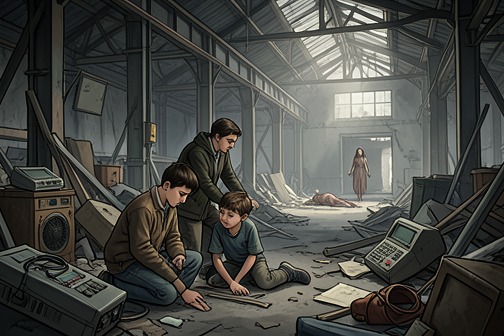
Khalid Kassem discovers a dead woman sealed inside a ruined plant and escapes with his brother Ahmed as the missile lodged in the wreckage explodes. The episode moves from scavenging to revelation to flight, making the young boy’s curiosity the means by which he encounters both a hidden human body and an immediate threat to life. His discovery does not resolve the mystery of the woman or the machinery around her; instead, the blast interrupts inquiry and turns knowledge into the chance to escape.
## The Ruined Plant and Khalid’s Search
The discovery begins after the plant has already been devastated. Once the smells have become bearable and the dogs picking through the wreckage show no further ill effects, nearby residents venture in to scavenge. The damage is so extensive that even technically minded explorers cannot identify the function of the machinery. They collect whatever might be sold, traded, or put to household use, then leave. The plant is thus approached as a place of wreckage and salvage, its former purpose obscured before Khalid ever enters it.
At thirteen, Khalid considers himself a man, and his ambition and sense of adventure exceed what others might expect of his small, slight frame. He has learned to treat that apparent disadvantage as useful: while his father and brothers depart, he stays behind and notices a crack in a collapsed wall that might admit him. He has also concealed a small torch found earlier in an office ruin. Its bulb remains intact, but its weak, fading beam is all the equipment he has. When it reveals a chamber through the crack, he takes the discovery as encouragement to continue alone.
The passage is so narrow that even his slight build barely gets him through. Inside, the room resembles a basement storage area. Blast damage and fallen floors have shattered much of the ceiling, but this particular space appears not to have suffered an explosion. Metal crates lie among the debris. Some are intact; others reveal lightweight foam cladding around machines, which are themselves wrapped in transparent plastic. Khalid recognizes the wrapping from packets of food he saw in a refrigerator in Baghdad: air had been removed to keep the contents fresh. He infers that the machines, too, have been preserved. His practical thought follows the discovery: even if he could recover one, he and his family would have no way to profit from it.
## The Sealed Woman and the Missile
As Khalid turns to leave, his torch catches a smaller crate split open by a long metal cylinder that has fallen across it. The shape beneath the obstruction is unlike the angular vacuum-packed machines; it suggests a cocoon. He puts down the torch and uses both hands and his slight body weight to roll the cylinder aside. It crashes to the floor and raises dust, leaving him coughing before he can resume his search with the weakening light.
The beam falls on a pair of staring eyes. Khalid screams, drops the torch, and is left in darkness. His fear is broken when his favourite brother, Ahmed, calls out for him. A second light comes on in the storeroom: red and intermittent. In its flashes, Khalid sees that the cocoon contains a young, black woman, already dead. The abrupt illumination makes the recognition partial and stuttering, but the essential fact is unmistakable: among the sealed machines is a human body.
Khalid then asks where the red light has come from. He traces it to the end of the metal cylinder he had rolled away. The Western lettering on it means nothing to him, but he recognizes the emblem of the nation his own country regards as its bitterest foe. He understands what has come through the roof and remained unexploded. The cylinder’s presence changes the meaning of the chamber: it is not merely a cache of preserved equipment and an inexplicable corpse, but also the site of an imminent explosion.
## Escape and Consequences
Khalid scrambles back toward the fissure. It seems narrower than before, whether because the gap has constricted or because fear makes him feel larger, and for a moment he believes he is trapped. With one arm through the opening, he struggles to get a hold on the ruined outer wall. Ahmed grasps his hand and drags him painfully through the gap. Seeing Khalid’s expression, Ahmed does not stop to argue; Khalid’s warning sends them running together.
Their escape is presented as a race in which the brothers help rather than abandon one another. They drive forward through waist-high rushes, able to focus only on the way ahead and the safety it promises. They do not see the ruins begin to lift behind them. The sound of the blast overtakes them first, and then the force reaches them from behind, picks them up, and hurls them onward. At the river, they crash into the water and let the current carry them before rising together, coughing and spluttering. Each checks the other for injury while also registering the condition of his own body. Ahmed asks if Khalid is all right; Khalid answers that he is, then asks the same of his brother.
## Narrative Significance
The sequence makes the event’s value shift stark: a potentially profitable discovery gives way to fear, then to the possibility of being trapped, and finally to survival. Khalid enters looking for something he can carry back proudly; instead, the torch reveals a dead woman, while the missile’s warning light forces him to abandon the search. His curiosity matters not because it yields an explanation or a prize, but because his attention to the object and its emblem alerts him to danger in time to act.
The close focus on the brothers’ shared movement keeps the escape from becoming a solitary feat. Ahmed first draws Khalid’s attention back toward the family, then physically pulls him from the fissure; once outside, they run as a pair and emerge from the blast to check one another. The event ends with their reciprocal questions about injury, not with an account of what the plant contained or who the dead woman was. Those unanswered discoveries remain in the scene’s wake, while the immediate consequence is clear: both brothers reach the river alive.
Event 2
Pal Maciver Senior’s suicide
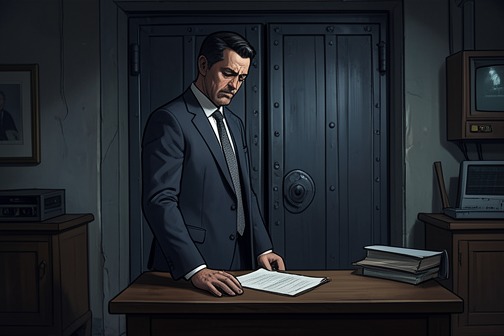
[Palinurus Maciver Senior](entity:character-recall-character-palinurus-maciver-s-615fe42d06b1)’s suicide occurred at [Moscow House](entity:location-recall-location-moscow-house-e45b6ce846c0) on [March 20, 1992](entity:time-recall-time-march-20-1992-75f861c0a516), and became both a family rupture and a template for interpreting his son’s later death. The original inquiry treated it as a suicide while his mental balance was disturbed, with trouble at work offered as an explanation; later testimony and the striking repetition of its circumstances reopened questions about what had driven him and what his family knew.
## Background: a lost place in business and family
Palinurus Maciver Senior inherited a flourishing manufacturing business from his father, Liam, and took pride in making it his own. He had once pursued climbing with conspicuous daring, but a fall on a later expedition left his left leg unable to bend and ended that part of his life. As his father’s health failed, he devoted himself to the firm. Its fortunes then declined after 1979: orders dried up and workers were laid off. When the American company [Ashur-Proffitt](entity:organization-recall-organization-ashur-proffitt-2e2148ea642c) approached, he accepted its offer rather than see more employees lose their jobs. The business became [Ashur-Proffitt-Maciver’s](entity:organization-recall-organization-ashur-proffitt-m-2699dece9a25), while he received money and a board seat that appeared to be more a public gesture than a substantial executive role.
The loss of his former position was discussed as a possible contributor to depression, not established as its sole cause. At the inquest, investigators noted speculation about the effect of losing the top job. [Andrew Dalziel](entity:character-recall-character-andrew-dalziel-d9a8d5234865) later recalled that the family had been told the death was connected with something at work. That explanation placed the suicide within a real reversal in status and occupation, but left open how much it could account for the crisis as a whole.
## The death at Moscow House
On March 18, 1992, [Kay Kafka](entity:character-recall-character-kay-kafka-c9821e026433) travelled to New York with her younger stepdaughter, [Helen Dunn](entity:character-recall-character-helen-dunn-a1854e2d6f34). Two days later, Palinurus Maciver Senior died at the family home. His son discovered the body on returning from Cambridge on March 23. [Cressida Maciver](entity:character-recall-character-cressida-maciver-c92928d78f04), then at school in Lincoln, was informed and came home the following day. Kay Kafka, still travelling in America with Helen, was harder to contact and arrived three days later.
The account of the method gave the later investigation an unsettling point of comparison. Andrew Dalziel remembered that Palinurus Maciver Senior had locked himself in his study and used a cord arranged with a Purdy shotgun to cause his death. [Peter Pascoe](entity:character-recall-character-peter-pascoe-3f6c4f8bc63a) focused on the room and the book found open on the desk: the son’s death had also involved an open book, and the possibility that it was the same title immediately raised the prospect of imitation. The original volume was too stained for the first investigator to identify its title at the scene. When the evidence was revisited, the book proved to be an [Emily Dickinson poetry collection](entity:object-recall-object-bb7277543370), and the page and poem numbers in the later case matched those in the old exhibit. The son’s copying of the arrangement was exact in that respect, though the repeated detail did not by itself explain either death.
The police account also recorded signs of a note that was never completed. A record had been set playing, and an envelope addressed to his wife indicated whom the note had been intended for. The note was burned and discarded; investigators could not establish why he changed course. The suggestion that he may have rejected what he had written, perhaps because it blamed his wife, remained speculation rather than a finding. The poetry book, left open on the desk, thus stood in the record as a substitute for a message whose contents were never recovered.
## Family rupture and competing explanations
The practical aftermath quickly exposed strain within the family. When Kay Kafka returned, she could not enter Moscow House because the locks had been changed on her stepson’s instructions. The police established that the change had been ordered by [Palinurus Maciver Junior](entity:character-recall-character-palinurus-maciver-j-bef8b0b1c03a). The inquest had returned a suicide verdict, and the family did not reclaim the evidence book, which remained in police storage. Kay Kafka later gave an address connected with [Tony Kafka](entity:character-recall-character-tony-kafka-e64a98b07fbe) at [Cothersley Hall](entity:location-recall-location-cothersley-hall-c60662c94c11); she married him eighteen months after her husband’s death. These facts establish a swift separation from the family home and a later new marriage, but do not by themselves establish the reason for either decision.
Cressida Maciver’s later account offered a more personal and explicitly uncertain explanation. She remembered her father as unusually distracted, worried and angry during the spring half-term before his death. According to her, her brother had told her that Kay Kafka had made another attempt to approach him, that he intended to tell their father, and that he was writing to set out his accusation. Cressida believed that Kay Kafka had travelled to America with Helen Dunn after learning that her stepson might disclose what had happened, and suspected that she had first presented him to his father as a sexual aggressor. These were Cressida’s recollections and suspicions, not independently established findings in the original inquiry. She could not know what was in her father’s mind; she imagined him left alone at home, uncertain whether his wife would return and separated from his younger daughter as well as from his son’s confidence.
The contrast between these accounts matters. The official conclusion linked the disturbed state of Palinurus Maciver Senior’s mind to work, while Cressida’s retrospective testimony located the crisis amid a household conflict and her brother’s threatened disclosure. Neither account supplies a definitive explanation. The chronology of Kay Kafka’s trip and the changed locks made the family’s estrangement visible, but the surviving record does not resolve how those events shaped the father’s decision.
## Afterlife as precedent
A decade later, Andrew Dalziel was at Moscow House on the anniversary of the death when the family was again confronted with a suicide bearing a close resemblance to the first. He described his presence as curiosity about a possible copycat, although Peter Pascoe suspected that this explanation concealed a stronger reason for his interest. The old case therefore returned not as settled history but as an investigative problem: the open book, the study and the method made resemblance concrete, while the father’s motive remained disputed.
A later account by [Laurence Waverley](entity:character-recall-character-laurence-waverley-40a78e5bcc5e) proposed that Palinurus Maciver Junior had learned something from [Jake Gallipot](entity:character-recall-character-jake-gallipot-1e00a7bca456) about the circumstances of his father’s death. Waverley reasoned that this discovery would have shocked the son, but probably did not by itself cause him to take his own life; some closer, unspecified event may have precipitated that decision. In his reconstruction, once the son had decided to die, he repeated his father’s circumstances using a distorted version of what Gallipot had told him. This is a retrospective interpretation, not a conclusive resolution of the first death. The suicide’s lasting significance lies in that distinction: its observable details could be copied and compared, but the human causes behind them remained uncertain.
Event 3
Ashur-Proffitt’s takeover of Maciver’s business
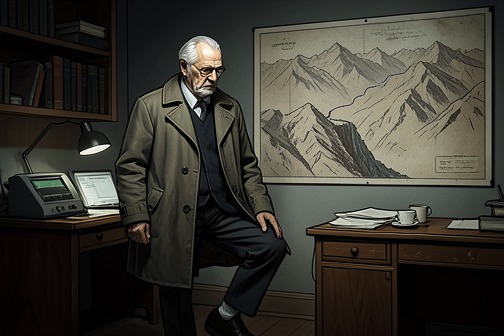
[Ashur-Proffitt’s takeover of Maciver’s business](entity:event-recall-event-ashur-proffitt-s-takeov-2be6c8d64ace) was a rescue on terms that also marked the end of [Palinurus Maciver Senior](entity:character-recall-character-palinurus-maciver-s-615fe42d06b1)’s control. Recalled by [Andrew Dalziel](entity:character-recall-character-andrew-dalziel-d9a8d5234865) during the inquiry, the sale followed industrial decline and workforce losses: Maciver’s survived, but its founder’s role in the company was reduced to a position that seemed more symbolic than executive.
## Decline Before the Sale
Before the company’s crisis, Palinurus Maciver Senior had thrown himself into the business after a climbing accident ended his mountaineering. On a return climb the year after a celebrated solo ascent, he fell and badly injured his left leg; although most of his injuries healed, the leg could no longer bend, making further mountain climbing impractical. Maciver’s then became his central commitment and pride, and its prosperity was sufficient for him to make several down payments toward a peerage.
That prosperity gave way after 1979. As government policy put people out of work, Maciver’s lost orders, its order book emptied, and workers were laid off. Dalziel’s account presents the company’s fortunes through a repeated image of falling: after Maciver Senior’s own fall ended his climbing, the business seemed to be falling from its former height as well.
## The Takeover and Its Terms
When an American outfit, [Ashur-Proffitt](entity:organization-recall-organization-ashur-proffitt-2e2148ea642c) Inc, approached, Maciver Senior faced a choice between taking its offer and seeing the remaining workers laid off. The account therefore frames the sale as a decision made under pressure rather than a freely chosen transfer of a flourishing concern. Maciver’s became [Ashur-Proffitt-Maciver’s](entity:organization-recall-organization-ashur-proffitt-m-2699dece9a25), also called [Ash-Mac’s](entity:organization-recall-organization-ash-mac-s-f21cc1f49b86).
In return, Maciver Senior received a substantial sum and a seat on the board as an executive director or in a similar capacity. Yet the title did not appear to give him a meaningful role in running the business. Dalziel characterizes the position as more of a face-saver than a real job: ownership had changed, and the former head of the family firm remained associated with it without retaining his former authority.
## Aftermath and Significance
The takeover changed both the company’s ownership and Maciver Senior’s place within it. He had once been able to take pride in a thriving business and its earnings; after the sale, he had money and a board position but apparently little work to do. When Pascoe asks whether that change affected him, Dalziel reports that this was what others believed, while making clear that it was not his own firm conclusion. The connection between losing the top job and Maciver Senior’s depression was also raised as speculation at the inquest, not established as a definitive cause.
The later family history underscores how durable the corporate change was. By the time of the police account of Maciver Senior’s death, Maciver’s had been taken over by the Americans in the [1980s](entity:time-recall-time-1980s-3c00692f91a5) and was known as Ash-Mac’s; Maciver Senior still held a board seat, but it seemed to be for show. The takeover thus functions in the account as both a business transaction that prevented further immediate layoffs and a personal displacement whose emotional consequences remain uncertain.
Event 4
Iran–Contra affair
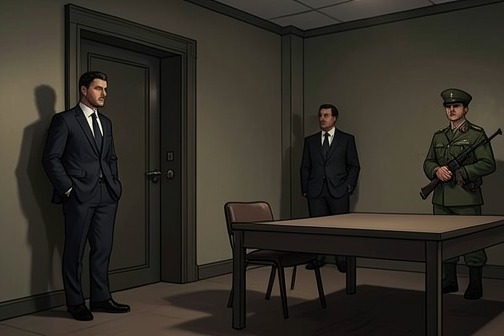
The [Iran–Contra affair](entity:event-recall-event-iran-contra-affair-b61e7c518fd3) is a mid-[1980s](entity:time-recall-time-1980s-3c00692f91a5) political scandal whose significance in the novel extends beyond the secret diversion of arms-sale profits: it provides a model of how powerful institutions can conduct illegal business while appearing untouched by it. Set beside [Ashur-Proffitt](entity:organization-recall-organization-ashur-proffitt-2e2148ea642c)’s simultaneous arms trade with [Iraq](entity:location-recall-location-7cb5e3b1d5ce), the affair exposes a world in which public morality, national policy, and commercial advantage pull in different directions, while responsibility remains difficult to pin down.
## Background and Parallel Arms Deals
In a satirical account presented as a modern fairy tale, American officials sell weapons to Iran and channel the profits to the Contra rebels in Nicaragua, who are fighting the country’s left-wing government. The same passage places this operation beside British arms sales to Iraq. Iraq is fighting Iran, yet officials on both sides of the Atlantic are portrayed as willing to supply weapons to opposing participants in the same war. A British minister’s later explanation, as recounted in the text, is that Western interests were served by keeping Iran and Iraq at war for as long as possible. The parallel does not make the two operations identical; it sets them within a shared political logic in which prolonging conflict can be treated as strategically useful.
The account connects the American scandal directly to Ashur-Proffitt, which had a substantial network of contacts in the Middle East and was seriously involved in the Iran arms sales. The company’s people, however, were never named or indicted in connection with the affair, according to the account given in the novel. That absence matters: the affair is not only a story about unlawful transactions but about the distance between a company’s involvement and the public record of individual culpability. The fairy-tale passage describes the conduct as contrary to the countries’ own laws, even as those responsible seem invisible to the authorities meant to oversee them.
## Secrecy, Accountability, and the Fairy-Tale Frame
The novel presents the affair through two sharply different tellings. One is the whimsical, deliberately dated online text [Kay Kafka](entity:character-recall-character-kay-kafka-c9821e026433) reads under the title Ashur-Proffitt and the Cloak of Invisibility. Its childish language makes the arms deals sound like an adventure, while its central image turns political impunity into a literal-seeming trick: the people involved are invisible, so those in charge cannot see what they are doing. Kay finds the style tedious, but the final passage holds her attention. It rejects the old justification that an enemy’s enemy can be used as a friend and insists that arms sellers must answer for whose side they serve.
That ending shifts the emphasis from covert manoeuvring to public responsibility. The fairy-tale voice may be flippant, but its closing challenge is direct: neither patriotic argument nor partisan labels settle the question of what a government or corporation is doing when it sends weapons across a moral and legal boundary. The contrast between the passage’s comic surface and its accusation gives the affair its force in the novel. The cloak of invisibility is not simply secrecy; it is the ability to make conduct that is known in some circles seem unseeable where accountability should begin.
## Aftermath and Ashur-Proffitt’s European Turn
A later account by [Andrew Dalziel](entity:character-recall-character-andrew-dalziel-d9a8d5234865) gives the scandal a more practical consequence for Ashur-Proffitt. After the affair drew scrutiny, the company’s senior figures were said to have kept a lower profile for a time. Some observers, Dalziel reports, believed this helped prompt Ashur-Proffitt to seek outlets in Europe, especially in countries with governments sympathetic to the United States and to the political right. The passage presents this explanation as an informed but not definitive account, rather than as a settled finding about the company’s motives.
The affair also left competing factions within the intelligence world. Dalziel’s contact, Dave Thatcher, tells him that not everyone connected with the relevant agencies supported the same people or shared the same loyalties. Some operatives went to prison; others, according to the account, might have welcomed the chance to settle scores or advance their careers by exposing additional participants. In this atmosphere, [Linda Steele](entity:character-recall-character-linda-steele-8fccd7852f45) was reportedly sent to investigate [Ash-Mac’s](entity:organization-recall-organization-ash-mac-s-f21cc1f49b86) and look for decisive evidence. Her work as a journalist offered a cover, while her earlier undercover work with Andrew Dalziel gave her a way to get closer to the company. Dalziel initially regards this explanation as far-fetched, but says he has encountered enough of the people involved to believe that their distorted view of events could make it plausible.
## Role in the Novel’s Larger Conflict
The affair’s legacy reaches into the investigation of [Palinurus Maciver Senior](entity:character-recall-character-palinurus-maciver-s-615fe42d06b1)’s death, though the novel does not present the scandal as a proven cause of that death. [Palinurus Maciver Junior](entity:character-recall-character-palinurus-maciver-j-bef8b0b1c03a) formally accuses Kay Kafka of helping drive his father to suicide and says she was in the United States when it happened. His recorded statement is made in the presence of Andrew Dalziel, whose casual opening on the unlabelled cassette alerts [Peter Pascoe](entity:character-recall-character-peter-pascoe-3f6c4f8bc63a) and [Shirley Novello](entity:character-recall-character-shirley-novello-acb52f7abc7e) to procedural irregularities. The accusation is Palinurus Maciver Junior’s claim, not a conclusion established by the affair or by the recording itself.
In [Laurence Waverley](entity:character-recall-character-laurence-waverley-40a78e5bcc5e)’s later account, Ashur-Proffitt’s intelligence connections shape how the family scandal is handled. Waverley says his department had considered encouraging Palinurus Maciver Junior’s revelations because they might distract attention from his father’s relations with Ash-Mac’s. But concern about the effects on Kay Kafka, [Helen Dunn](entity:character-recall-character-helen-dunn-a1854e2d6f34), and [Cressida Maciver](entity:character-recall-character-cressida-maciver-c92928d78f04) led him to consider ways of keeping him quiet. He describes Andrew Dalziel’s friendship with Kay Kafka as useful to the inquiry’s management and says that Palinurus Maciver Junior was silenced without Waverley having to act directly. These disclosures do not resolve every question about the company or the death; they show how institutional interests can turn a private accusation into a tactical resource, then suppress it when its consequences become inconvenient. In that sense, the Iran–Contra affair supplies more than historical background: its pattern of hidden dealings and compromised oversight recurs in the novel’s local investigation, where knowing about wrongdoing is not the same as bringing it into the open.
Event 5
September 11 attacks
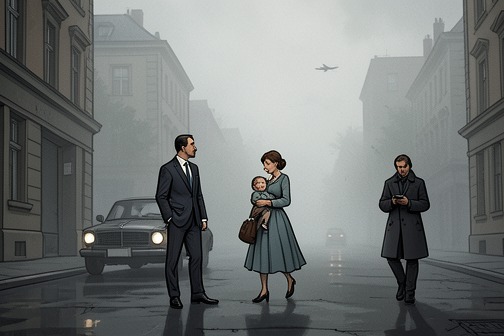
The [September 11 attacks](entity:event-recall-event-september-11-attacks-8e527031f862) are not shown directly; their significance emerges through the changed judgments and choices they provoke. In the aftermath, [Tony Kafka](entity:character-recall-character-tony-kafka-e64a98b07fbe) questions where he belongs, whether his work remains compatible with his understanding of American responsibility, and whether the business world around him has truly changed. The attacks thus become a turning point whose effects reach from his family life to the political assumptions underpinning his professional relationships.
## Background and narrative treatment
The narrative approaches the attacks retrospectively, through conversations and reflections rather than a depicted scene. Tony and [Kay Kafka](entity:character-recall-character-kay-kafka-c9821e026433) discuss the period after the attacks, when, as Tony recalls it, certainty had given way to conversations about everything. The absence of a direct account of the event places emphasis on what follows: a personal and political reckoning that continues after the immediate crisis.
The book identifies September 11 as a break in the ordinary order of things, but its evidence here is chiefly about interpretation, not the attacks’ mechanics. Kay recalls that Tony’s instincts had told him to return permanently to America. At the same time, [Helen Dunn](entity:character-recall-character-helen-dunn-a1854e2d6f34) was three months pregnant, and Tony understood how his wife would feel about such a departure. He stayed in Britain. The decision therefore emerges not as a simple rejection of home, but as a choice constrained by care for his family and accompanied by unresolved unease.
## Tony Kafka’s divided loyalties
The attacks sharpen Tony’s existing connection to America into a question of obligation. He speaks of the country as a place where good Americans ought to be, yet distinguishes his attachment to Kay from his discomfort with Britain. Kay reassures him that they are as good Americans as they can be; Tony, however, suspects that a time is coming when more will be demanded of them. His words make national belonging feel less like a settled identity than an approaching test.
That uncertainty also unsettles Tony’s understanding of patriotic debt. His father had taught him that help received creates a debt that can never truly be repaid, recalling the American sergeant who carried him to safety and died after being shot. Tony recognizes that personal debts and patriotic debts are not always the same. After September 11, he looks again at where he is—in every sense—and wonders whether he should be there. The repeated question of place links his physical location, his family commitments, and his allegiance to the country he has not returned to.
## Business and political consequences
Tony’s doubts take professional form when he considers whether to slow or cool the business. In conversation with [Victor Warlove](entity:character-recall-character-victor-warlove-f20c24449336) and [Timothy Gedye](entity:character-recall-character-timothy-gedye-13fa63c6933a), he invokes the war against terrorism as a reason to ask whether continuing as before is wise. Victor, by contrast, treats the new situation as a marketing opportunity. Their exchange exposes a conflict of values: Tony sees circumstances demanding caution, while Victor sees the possibility of commercial advantage.
The disagreement is sharpened by the partners’ different readings of the political climate. Victor reflects that profit and patriotism once seemed inseparable, but that the atmosphere has changed. Timothy notices that Tony’s heart may no longer be in the work and suspects he has a particular reason for wanting to remain within the mainstream. Tony does not lay out every concern in the meeting; his hesitation, including raising soup and returning it untasted, registers his reluctance to proceed as though nothing has shifted. The contrast is not simply between American and British attitudes, but between Tony’s misgivings and colleagues who can absorb the crisis into familiar business calculations.
## Aftermath and significance
Kay sees the same divide from within Tony’s family life. She dislikes [Joe Proffitt](entity:character-recall-character-joe-proffitt-3c6e145a3786), head of the [Ashur-Proffitt Corporation](entity:organization-recall-organization-ashur-proffitt-c-585104c29a9e), but feels unable to speak too strongly against him. She believes Tony’s instincts had urged him home after the attacks, while her view of Joe is that his business certainties have scarcely been dented. Tony rejects the idea that Joe is indifferent: he says Joe feels things strongly, though they do not meet face to face often enough. Their disagreement leaves a meaningful uncertainty between Tony’s defense of his colleague and Kay’s suspicion that business has carried on largely unchanged.
Tony does try to communicate his concerns. On a train, he speaks with Joe on an open line, giving him what information he can, and they agree to bring forward the following month’s strategy meeting. Tony expects to return home within a day or so. The decision converts unease into action, even though the conversation does not establish that the corporation’s underlying course will change. For Kay, meanwhile, Tony’s continued presence in Britain remains tied to Helen’s pregnancy as well as to his divided sense of duty.
The event’s narrative force lies in this uneven aftermath. Tony experiences September 11 as a rupture that makes location, patriotism, and commercial loyalty newly uncertain. Victor can describe the same changed world as an opportunity, and Kay sees little evidence that Joe’s business outlook has been transformed. The attacks therefore do not supply a single shared interpretation; they expose the distance between a crisis felt as a demand for moral reconsideration and one treated as a condition to navigate commercially.
Event 6
Pal Maciver’s death at Moscow House
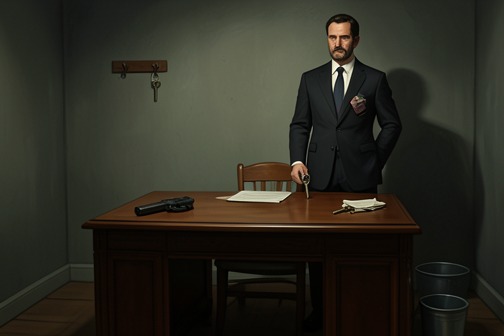
[Palinurus Maciver Junior](entity:character-recall-character-palinurus-maciver-j-bef8b0b1c03a)’s death at [Moscow House](entity:location-recall-location-moscow-house-e45b6ce846c0) is presented as an apparent suicide whose carefully arranged circumstances repeat the death of his father, [Palinurus Maciver Senior](entity:character-recall-character-palinurus-maciver-s-615fe42d06b1). The echo gives the death its decisive significance: although police initially see the familiar signs of suicide, the resemblance raises questions about family history, responsibility, and whether the apparent explanation can be trusted. The novel never resolves those questions into a single certain account of what drove him to die.
## Circumstances and Preparation
The death occurred on [March 20, 2002](entity:time-recall-time-march-20-2002-b8cc1646b3bf), the last day of winter. In the opening account, Palinurus Maciver Junior is aware that only minutes remain in his life. Before entering the study, he returns a key to a labelled hook in a glass-fronted cupboard, then goes upstairs and uses another key to open the study door. The small, deliberate actions establish that the room and its contents have been arranged, rather than encountered by chance.
Inside, he burns a set of papers in the wastepaper bin and reduces the remains to ashes. He then opens a concealed recess behind the gun case and removes a shotgun and cartridges. The same recess contains a leather-bound diary marked with the year 1992. Its presence beside the weapon connects the present death materially to the year of his father’s suicide, though the immediate account does not explain what the diary contains. Palinurus Maciver Junior writes an envelope addressed to Sue-Lynn before returning to the gun. These preparations suggest deliberate planning, but the evidence does not disclose the full contents of the destroyed papers or the message he intended the envelope to carry.
The manner of death closely follows the father’s. Palinurus Maciver Junior uses a short loop of string as part of the arrangement and removes one shoe and sock; the firearm is found between his legs. The study door is locked and bolted from the inside, while the windows are secured by heavy shutters. These details become the basis of [Andrew Dalziel](entity:character-recall-character-andrew-dalziel-d9a8d5234865)’s initial reading of the scene as suicide. The narrative describes the process through divided aspects of the dying man’s consciousness, separating feeling, purposeful action, and observation before briefly bringing them together again. That formal division makes the death feel at once methodical and difficult to comprehend, without supplying a definitive explanation for the choice.
## Discovery and Initial Inquiry
When the death is discovered, [Tom Lockridge](entity:character-recall-character-tom-lockridge-a622f102f5c7) confirms that Palinurus Maciver Junior is dead and estimates that he has been so for two to four hours. Lockridge gives the probable cause as a self-inflicted gunshot wound to the head. Andrew Dalziel points to the locked and bolted door, the shuttered windows, and the position of the gun and footwear as signs that support suicide. [Peter Pascoe](entity:character-recall-character-peter-pascoe-3f6c4f8bc63a) resists settling the matter immediately. Their disagreement establishes an important distinction in the inquiry: the scene can appear to meet the practical test for an unassisted suicide, while the history behind it remains unresolved.
For Andrew Dalziel, an unassisted suicide would mean there was no crime to investigate. Yet Peter Pascoe observes that Palinurus Maciver Junior’s death appears to repeat the earlier death of his father, rather than simply resemble an ordinary suicide. The apparent repetition turns what might have been treated as a closed matter into another chapter in the family’s history. It also leaves open whether the matching circumstances express intention, imitation, or a distorted understanding of the earlier event; the scene alone cannot settle which interpretation is right.
## Family History and the Weight of Repetition
The echo reaches beyond the two deaths to the history of the Maciver business and family. Palinurus Maciver Senior had taken over a flourishing company after his father, Liam, and devoted himself to it. After his climbing career ended with a fall that left his left leg unable to bend, the business became a central source of pride and purpose. Its fortunes later declined amid layoffs and an empty order book. When [Ashur-Proffitt](entity:organization-recall-organization-ashur-proffitt-2e2148ea642c) offered to take over, Palinurus Maciver Senior accepted rather than see more workers lose their jobs. The company became [Ashur-Proffitt-Maciver’s](entity:organization-recall-organization-ashur-proffitt-m-2699dece9a25), while he received money and a board position that Andrew Dalziel describes as largely a face-saving role. This background supplies pressures and losses surrounding the older man’s life, but does not establish the cause of either suicide.
The timing gives the younger man’s death another painful family consequence. [Helen Dunn](entity:character-recall-character-helen-dunn-a1854e2d6f34) was pregnant, and Palinurus Maciver Junior would have become an uncle if he had lived one more day. She had brought up her family in [Mid-Yorkshire](entity:location-recall-location-mid-yorkshire-906d094bcf39), and there had been signs of rapprochement: he had accepted her situation and renewed contact with her husband, [Jason Dunn](entity:character-recall-character-jason-dunn-432bb1e84fe8), through squash. His death therefore falls just as a new generation is about to arrive and family relations appear to be easing. The possibility that he chose the moment to upstage his sister is raised in conversation, but remains speculation, not an established motive.
The news reaches [Lavinia Maciver](entity:character-recall-character-lavinia-maciver-11e70a8713da) the following morning at [Blacklow Cottage](entity:location-recall-location-blacklow-cottage-8fb40ab378f8). [Laurence Waverley](entity:character-recall-character-laurence-waverley-40a78e5bcc5e) tells her that her nephew is dead, as her brother had been before him. The shock briefly makes the two old acquaintances address one another by their first names. Lavinia asks whether she is needed and accepts that she must go with Laurence to learn what has happened. Her response registers the death not as an isolated police matter but as the return of an earlier family loss, now repeated in the next generation.
## Interpretations and Uncertainty
Peter Pascoe’s response shows how the case unsettles the habits of criminal investigation. He reflects that a murder inquiry usually directs attention toward reconstructing the perpetrator’s mind, an intellectual pursuit organized around identifying a responsible person. Trying to understand someone for whom death has become an escape, he finds, turns the inquiry inward and risks circling back on the investigator’s own feelings. The image of Palinurus Maciver Junior’s final use of the string remains with him; he tries to dismiss it, but cannot treat the death as merely a puzzle of evidence.
A later account from Laurence Waverley proposes that Palinurus Maciver Junior may have learned something about his father’s death from [Jake Gallipot](entity:character-recall-character-jake-gallipot-1e00a7bca456). Waverley conjectures that the younger man drew Gallipot into discussing what he knew or suspected, perhaps by bribery, alcohol, drugs, or some combination; he admits that he does not know how this was done. Waverley further suggests that such information was shocking but insufficient by itself to explain the decision to die, and that Palinurus Maciver Junior may then have repeated his father’s circumstances using a garbled version of Gallipot’s account. This is Waverley’s interpretation, not a confirmed reconstruction. He also describes Gallipot’s death as an accident that deprived the investigators of an opportunity to question him further.
The novel thus preserves a gap between the visible arrangement and the private cause. The doctor’s finding and the locked room support an apparent suicide; the concealed weapon, the 1992 diary, and the close resemblance to Palinurus Maciver Senior’s death invite a broader inquiry; and the proposed connection to Jake Gallipot remains conjectural. The repetition is undeniable, but its meaning is not. That uncertainty makes Palinurus Maciver Junior’s death both an ending in its own right and a reopening of the questions left behind by his father.
Event 7
Birth of Helen Dunn’s twins
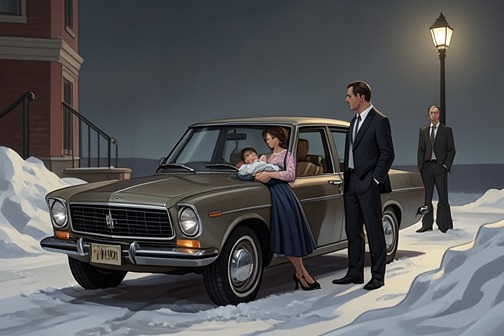
[Helen Dunn](entity:character-recall-character-helen-dunn-a1854e2d6f34)’s twin birth at [Moscow House](entity:location-recall-location-moscow-house-e45b6ce846c0) interrupts a police response and turns an already tense scene into an immediate family emergency. As an ambulance is delayed by a pile-up in fog, those present must respond without knowing how long help will take. The twins are born before the paramedics reach the house, and [Ellie Pascoe](entity:character-recall-character-ellie-pascoe-af7fa2fb4ee9) announces that they are a boy and a girl.
## A sudden emergency
The birth begins while [Andrew Dalziel](entity:character-recall-character-andrew-dalziel-d9a8d5234865) and [Peter Pascoe](entity:character-recall-character-peter-pascoe-3f6c4f8bc63a) are discussing who is directing events at Moscow House. A wavering cry first makes Peter think of an owl; then an alarmed male voice calls for help and identifies the crisis: Helen has gone back into the car, and [Jason Dunn](entity:character-recall-character-jason-dunn-432bb1e84fe8) says that the baby is coming. The change is abrupt: the scene’s attention shifts from the officers’ exchange to the needs of a woman in labor.
[Kay Kafka](entity:character-recall-character-kay-kafka-c9821e026433) runs toward Helen, followed closely by the other women. Their response is immediate and practical, before the passage establishes any plan for medical care. Peter’s joking question to Andrew about obstetrics adds a brief note of police banter, but the urgency soon becomes logistical rather than comic.
## The choice of where to wait
The radio reports that the ambulance sent to Moscow House may be delayed because a pile-up in fog on the bypass has left emergency services stretched. Ellie points out that Helen is also under pressure and proposes bringing her into the house if the wait will be long. Peter, by contrast, asks whether driving her straight to hospital would make more sense. The passage records the competing options but does not narrate a formal decision between them.
The event’s outcome makes the house the setting for the birth: after the babies cry, Ellie appears in the lounge doorway, and the paramedics enter through the front door at the same moment. The sequence preserves the uncertainty of the earlier discussion without suggesting that the ambulance delay was resolved before delivery. Instead, the birth has already happened by the time the medical team arrives.
## The birth and the paramedics’ arrival
A piercing cry from one baby is followed by another, making the sound a duet. The cries announce the outcome before anyone provides an explanation: Helen has given birth to twins. The paramedics arrive as Ellie emerges from the lounge, visibly exultant, and she tells the others that the babies are a boy and a girl. One paramedic passes her to get inside, while Andrew asks whether everything is all right. The available account ends there, without giving a further report on Helen’s or the babies’ condition.
The order of these details gives the scene its central reversal. The ambulance had been expected as the timely help, but the babies’ cries come first; the paramedics arrive only as the immediate result is being announced. Ellie’s brief declaration supplies the essential facts, while the question about whether all is well leaves the medical aftermath open rather than resolving it within the scene.
## Significance in the scene
The birth brings an intensely personal event into the midst of the officers’ work at Moscow House. The officers’ exchange about authority and their brief banter give way to calls for help, a decision about transport, and the sound of newborns. The shift is not presented as a break from urgency but as a change in what urgency demands: attention moves from managing the scene to supporting Helen and welcoming the children.
The episode also builds its tension through timing rather than through a description of the delivery. First comes the mistaken thought that the wavering cry is an owl; then Jason’s alarm clarifies the emergency; the radio makes timely ambulance assistance doubtful; and finally the babies’ cries confirm that the birth has occurred. The paramedics’ near-simultaneous arrival provides help, but not before the decisive event. What the scene confirms is specific and joyful—the arrival of a boy and a girl—while leaving their subsequent condition unstated.
Event 8
Palinurus Maciver Sr’s suicide
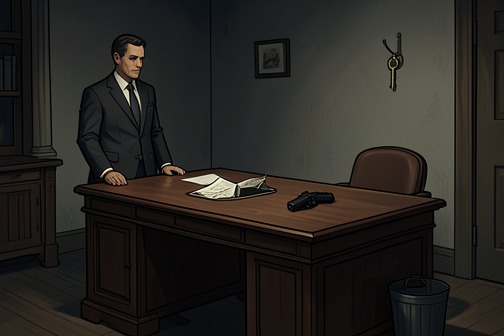
[Palinurus Maciver Senior](entity:character-recall-character-palinurus-maciver-s-615fe42d06b1)’s suicide is both a family catastrophe and a disputed turning point: his death followed an accusation that placed him between his wife and son, while later investigators could not establish exactly what drove him to act. The novel presents the event through retrospective accounts and a reconstruction of the scene, preserving the difference between what witnesses believed and what could be known.
## Family and business pressures
[Palinurus Maciver Junior](entity:character-recall-character-palinurus-maciver-j-bef8b0b1c03a)’s account places his father’s crisis against years of strain. The children’s mother died when Junior was fourteen, [Cressida Maciver](entity:character-recall-character-cressida-maciver-c92928d78f04) was eleven, and [Helen Dunn](entity:character-recall-character-helen-dunn-a1854e2d6f34) was three. Their aunt, [Lavinia Maciver](entity:character-recall-character-lavinia-maciver-11e70a8713da), moved into the family home to care for them, but Junior describes her care as limited: she kept them fed and warm while spending much of her time in the garden. A little over a year after their mother’s death, [Kay Kafka](entity:character-recall-character-kay-kafka-c9821e026433) entered the household, and Lavinia took the opportunity to leave [Moscow House](entity:location-recall-location-moscow-house-e45b6ce846c0) and return to her cottage.
The family loss coincided with serious trouble at Maciver’s. After the business faltered during the recession, [Ashur-Proffitt](entity:organization-recall-organization-ashur-proffitt-2e2148ea642c) acquired it and it became [Ashur-Proffitt-Maciver’s](entity:organization-recall-organization-ashur-proffitt-m-2699dece9a25), also known as [Ash-Mac’s](entity:organization-recall-organization-ash-mac-s-f21cc1f49b86). Palinurus Maciver Senior received money and a seat on the board, but the position was described as more face-saving than substantial. Earlier, he had taken pride in the business and devoted himself to it after a climbing accident left him unable to bend his left leg. These circumstances help explain why his changing place in the company mattered, but they do not prove that business disappointment caused his suicide.
## The household crisis
In the period before the death, Junior believed that Kay had made advances toward him. He intended to tell his father and expected Cressida to support his account. Cressida later recalled that her father seemed distracted, worried, angry, and frustrated during a school holiday, while Junior said he would try to speak with him. He subsequently told her he was writing to their father to expose Kay’s conduct. These accounts establish the allegation and the family conflict around it; they do not independently resolve what happened between Kay and Junior.
Kay left for America with Helen, and Palinurus Maciver Senior died while they were away. Kay maintained that the trip had been arranged with her husband’s agreement and that she planned to return by Easter. Junior suspected that she had anticipated his accusation and presented her own account first, leaving their father to choose between believing his son’s allegation and believing that his son had tried to assault his wife. Cressida likewise considered it possible that Kay had pre-empted Junior’s disclosure. The surviving accounts therefore make the departure and the timing central to the crisis without establishing what Palinurus Maciver Senior knew or believed before his death.
## Discovery and reconstruction
The investigation reconstructed a sequence in which Palinurus Maciver Senior put on a record, sat down to write a note addressed to his wife, then apparently changed course. Investigators believed he burned the note and used a poetry book instead. They further concluded that he removed a shoe and sock, placed a loop of twine around his toe with the other end attached to the trigger of a shotgun, and arranged the weapon beneath his jaw. The account is presented as a forensic reconstruction, not as a witnessed description of his final thoughts.
The inquiry took place amid pronounced family bitterness. [Andrew Dalziel](entity:character-recall-character-andrew-dalziel-d9a8d5234865) later acknowledged that there had been a proper investigation, but recalled that he had acted as Kay’s protector and had restrained the son who was voicing accusations. He said he had expected a more contentious inquest, yet it passed without the confrontation he anticipated. His intervention complicates the official history: the death was investigated, but the family’s allegations did not receive an open airing at the inquest.
## Aftermath and unresolved meaning
The suicide remained a reference point when Palinurus Maciver Junior later died in circumstances that repeated his father’s method. A later account suggested that Junior had learned from [Jake Gallipot](entity:character-recall-character-jake-gallipot-1e00a7bca456) something about the circumstances of his father’s death. That information may have shocked him, but the account explicitly rejects it as a sufficient explanation for his suicide: some nearer cause must also have been involved. The nature of that immediate cause is left unstated, and the information Junior received may itself have been incomplete or distorted.
The repetition makes the father’s death more than a closed case. Junior apparently used a garbled version of what he had learned as a template, so the earlier suicide returned as a pattern reproduced under conditions that remained unclear. In both deaths, the method could be reconstructed more readily than the state of mind behind it. The novel thus keeps the event’s consequences visible—family rupture, an inadequately aired accusation, and a later repetition—while refusing to present a single motive as settled fact.
Event 9
Kay Maciver’s trip to the United States with Helen

[Kay Maciver’s trip to the United States with Helen](entity:event-recall-event-kay-maciver-s-trip-to-t-4392666ce5a8) became a turning point in an already fractured family: [Kay Kafka](entity:character-recall-character-kay-kafka-c9821e026433) left with nine-year-old [Helen Dunn](entity:character-recall-character-helen-dunn-a1854e2d6f34) just as [Palinurus Maciver Junior](entity:character-recall-character-palinurus-maciver-j-bef8b0b1c03a) was trying to tell his father about Kay’s alleged conduct toward him. [Palinurus Maciver Senior](entity:character-recall-character-palinurus-maciver-s-615fe42d06b1) died soon afterward. Palinurus Maciver Junior and his sister [Cressida Maciver](entity:character-recall-character-cressida-maciver-c92928d78f04) connected the departure to the crisis, but their accounts do not establish that Kay caused or intended their father’s death. The journey’s lasting consequence was also legal and familial: under Palinurus Maciver Senior’s will, Kay was Helen’s guardian, and Helen wanted to remain with her.
## Background and timing
By the time the journey was planned, relations within the household had deteriorated. Palinurus Maciver Junior recalled that he had decided to tell his father what he said had happened between him and Kay Kafka. He was concerned about the timing: Kay was due to take Helen to the United States within days, and he suspected that she might speak to Palinurus Maciver Senior first. His account presents the impending departure not as an isolated family holiday but as the deadline against which he measured his own hesitant attempt to disclose what he alleged.
The disclosure did not happen in the way Palinurus Maciver Junior intended. He first telephoned his father in London, but described Palinurus Maciver Senior as distant and distracted; he ended the conversation without telling him. He later wondered whether Kay had already influenced his father’s view of him, though he acknowledged this as a suspicion rather than something he knew. Instead of meeting his father on his return, he wrote a letter, which he expected would arrive the day before Kay and Helen were due to fly. When no call came, he telephoned and received no answer. These missed opportunities make the journey’s timing consequential in his account, while leaving uncertain what Palinurus Maciver Senior had read or understood before his death.
## The departure and competing accounts
Palinurus Maciver Junior believed his father had received the letter and speculated that it was the paper he later found burning in a wastepaper bin. He also suspected that Kay had anticipated his accusation by offering Palinurus Maciver Senior a contrary version, in which Palinurus Maciver Junior was the aggressor. His explanation of the crisis rests on that proposed collision of accounts: he imagined his father confronted with two incompatible descriptions of his family and unable to bear either. This is Palinurus Maciver Junior’s interpretation of his father’s state of mind, not direct evidence of what Palinurus Maciver Senior thought.
Cressida Maciver’s later recollection confirms the central sequence: Kay went to America with Helen, and Palinurus Maciver Senior died while they were away. Cressida reported that Kay described the trip as arranged with her husband’s full cooperation and said she would return by Easter. Cressida, like her brother, doubted that explanation. She believed Kay had acted before Palinurus Maciver Junior could speak to their father, but her account, too, conveys suspicion rather than proof of prior planning. The gap between the stated family arrangement and the siblings’ interpretation is central to the event: the journey is certain, while its purpose and its relation to the death remain disputed.
## Death and immediate aftermath
In Palinurus Maciver Junior’s account, the departure and his father’s death follow one another closely. He accused Kay of having pushed Palinurus Maciver Senior toward suicide and of leaving for the United States in anticipation of what might happen. Cressida likewise remembered receiving the news that Kay had gone with Helen and that their father had killed himself. Both accounts place the journey within the family’s crisis, but neither can establish that Kay deliberately caused the death. The event’s significance lies partly in this unresolved boundary between sequence, suspicion, and culpability.
The journey also changed Helen’s situation. Palinurus Maciver Senior’s will had appointed Kay as her guardian. Helen was nine, while Palinurus Maciver Junior was already an adult and Cressida was close to eighteen; the will therefore affected Helen differently from her older siblings. Cressida recalled that she and Palinurus Maciver Junior could not simply remove Helen from Kay’s care, and that Helen herself wanted to stay with Kay. The departure consequently carried an outcome beyond the period abroad: it reinforced Kay’s position as the person legally entitled to look after the youngest child, despite the older siblings’ distrust of her.
## Retrospective meaning
The journey later acquired a second significance because Palinurus Maciver Junior came to believe that his father’s death and his own death repeated a family pattern. In a later account, a speaker proposed that new information about the circumstances of Palinurus Maciver Senior’s death may have disturbed Palinurus Maciver Junior, but also judged that it could not by itself explain his decision to die. That interpretation points toward an immediate personal crisis while describing the later repetition of the paternal death as a distorted reenactment. It does not settle the truth of the earlier accusations surrounding Kay’s journey.
The narrative therefore preserves the trip as both an ordinary-sounding arrangement, described as a visit to America with a child, and a contested turning point in the family history. The siblings’ accounts make the timing ominous: a letter, a departure, a father left alone, and a death whose meaning remains uncertain. Their conviction that Kay had acted against them is part of the record, but so is the limit of what they could know about Palinurus Maciver Senior’s private thoughts. The journey divides what happened from what the family believed had happened, and leaves Helen’s guardianship as its clearest practical consequence.
Event 10
Pal Maciver Jr.’s accusation letter to his father
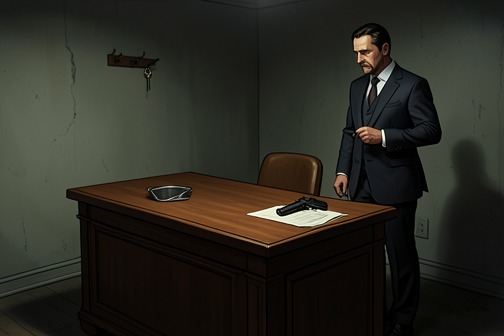
[Palinurus Maciver Junior](entity:character-recall-character-palinurus-maciver-j-bef8b0b1c03a)’s accusation letter to his father was a belated attempt to disclose his account of [Kay Kafka](entity:character-recall-character-kay-kafka-c9821e026433)’s conduct and to intervene in a family crisis. Written after he left the family home and before Kay’s trip to the United States with [Helen Dunn](entity:character-recall-character-helen-dunn-a1854e2d6f34), it arrived at a moment when he feared his father might hear Kay’s version first. The letter’s fate remains uncertain: Palinurus later believed his father had received and burned it, but could not know what the letter had meant to him or how much it contributed to his death.
## Background and Purpose
The letter followed an incident between Palinurus and Kay at the family home. The account presented in his later recollection is his own: he says he seriously considered telling [Palinurus Maciver Senior](entity:character-recall-character-palinurus-maciver-s-615fe42d06b1) what had happened, while Kay threatened to give his father a counter-account that characterized Palinurus as the aggressor. The episode thus left him facing not only the difficulty of disclosing a private family matter but also the possibility that his disclosure would be turned against him.
The next morning, Palinurus packed his bag and left before his father returned. Kay greeted him in an ordinary manner, and he says that her composure briefly made him doubt his own recollection. He then reminded himself of marks on his back, which he understood as evidence of the previous night. Rather than remain at the house, he went back to Cambridge to consider what to do. His departure bought him distance, but also made an in-person conversation with his father harder to begin.
The timing sharpened the urgency. Kay was due to take Helen to America within days, and Palinurus suspected she might speak to his father before he and [Cressida Maciver](entity:character-recall-character-cressida-maciver-c92928d78f04) could explain their concerns during the Easter vacation. He feared that the competing accounts would leave his father forced to choose between believing his wife had behaved improperly and believing his son had attempted to assault her. This was Palinurus’s forecast of the family’s predicament, not proof of what his father was told or accepted.
## From Disclosure to Letter
Palinurus first telephoned his father in London. He recalls the conversation as distant and distracted, and says he ended the call without raising the accusation. He later wondered whether Kay had already influenced his father, but the recollection offers this only as a suspicion. His hesitation was followed by regret: he thought he should have met his father when he returned, yet did not do so.
Instead, Palinurus wrote the letter. He expected it to reach his father the day before Kay and Helen were to fly to America. The letter was therefore not an abstract complaint or a report made long after the crisis: it was his chosen means of getting an account to his father while a family confrontation seemed imminent, after a telephone call had failed to open one. The evidence does not reproduce the letter’s full wording, so its precise arguments and details cannot be recovered from the later account.
The letter also belonged to a broader effort to secure support. In a recollection of an earlier school visit, Palinurus’s sister says that he had spoken of writing to their father to set him straight about Kay and had asked her to be ready to confirm his account if their father sought her testimony. She says she was willing to support him. This makes the letter part of an anticipated family disclosure, not a wholly isolated act; it does not, however, establish what the sister knew firsthand about the incident itself.
## Silence and the Uncertain Fate of the Letter
Palinurus expected an immediate telephone call from his father. When none came, he waited a day and called himself, but there was no answer. He then left the matter alone, expecting that the end of term would bring him home in a few days and give them a chance to talk. That interval turned the letter’s silence into an unresolved question: it might have been received without a reply, delayed, or not read in time. The account confirms no explanation for the lack of contact.
After finding his father dead, Palinurus asked himself whether the letter had reached him. He believed it had and thought it might have been the paper his father burned in the wastepaper bin. That identification is explicitly conjectural; the narrative does not establish that the burned paper was the accusation letter. Nor does it establish whether his father spoke to Kay about it before she left. Palinurus’s bet was that he had, while recognizing that Kay might already have presented her own account.
A later account by Palinurus’s sister partly supports the sequence of disclosure without resolving those uncertainties. She says Palinurus confirmed that something had happened during his earlier visit home, that he had again threatened to tell their father, and that this time he had followed through. She also understood that he suspected Kay had anticipated his accusation with a story casting him as sexually dangerous. Her recollection corroborates that he intended to expose his version and believed it had been countered; it does not prove that the letter itself was read or burned.
## Consequences and Narrative Significance
The letter’s importance lies as much in its unanswered status as in its intended message. Palinurus’s account connects it to his father’s isolation, the departure of Kay and Helen, and the pressure of choosing between incompatible stories. He concludes that this pressure helped drive his father to suicide and accuses Kay of deliberately pushing him toward that crisis. Those are Palinurus’s conclusions, expressed after the death; the evidence does not independently confirm Kay’s intentions or establish the letter as the cause.
The episode is consequently narrated through layers of uncertainty: Palinurus’s delayed disclosure, his assumptions about his father’s silence, his conjecture about the burned paper, and his later attribution of responsibility. The letter promises a direct communication between father and son, yet its apparent silence leaves the crucial exchange inaccessible. It marks Palinurus’s attempt to speak, but cannot tell the reader precisely what his father received, believed, or decided.
Event 11
Pal Maciver Jr.’s recorded statement
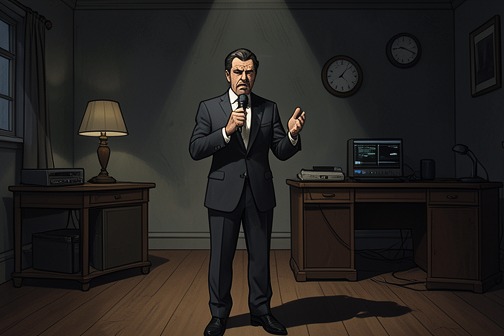
[Pal Maciver Jr.’s recorded statement](entity:event-recall-event-pal-maciver-jr-s-record-1e6770723960) is a formal police account in which [Palinurus Maciver Junior](entity:character-recall-character-palinurus-maciver-j-bef8b0b1c03a) challenges the handling of his father’s death and accuses [Kay Kafka](entity:character-recall-character-kay-kafka-c9821e026433) of abusing her position as his stepmother and contributing to his father’s suicide. Its decisive significance lies not in establishing that his allegations are true, but in showing that he made them directly, insisted they be preserved, and was nevertheless absent from the official account of the case.
## Recording and occasion
The statement is dated [March 27, 1992](entity:time-recall-time-march-27-1992-9171b7475d98), and begins with a formal identification of Palinurus Maciver Junior and a declaration that he is speaking of his own free will. He identifies the subject as the alleged suicide of his father, [Palinurus Maciver Senior](entity:character-recall-character-palinurus-maciver-s-615fe42d06b1). The recording frames his account as a deliberate attempt to place his suspicions on record: he says that he has already tried to alert the police to what he believes happened, but has seen no indication that they are acting on those suspicions. He therefore wants to make a formal statement rather than leave his accusation as an informal complaint.
The recording is later played for [Peter Pascoe](entity:character-recall-character-peter-pascoe-3f6c4f8bc63a) and [Shirley Novello](entity:character-recall-character-shirley-novello-acb52f7abc7e). Before starting it, Pascoe waits until Novello is seated; the familiar voice of [Andrew Dalziel](entity:character-recall-character-andrew-dalziel-d9a8d5234865) then introduces the statement and invites the younger Maciver to speak. The contrast between Dalziel’s brisk, joking manner at the start and the gravity of what follows makes the tape a record not only of the allegation but also of the police setting in which it was given. At the end, the speaker marks the time as 1:53 p.m., closing an account that began at 1:37 p.m.
## The accusations and their limits
Palinurus Maciver Junior’s central claim is that his father was deliberately driven to the point of suicide and that Kay was involved. He does not present himself as knowing exactly what occurred in the study, nor does he claim to possess physical proof. Instead, he distinguishes between what he suspects and what he can establish: he believes Kay caused or hastened his father’s collapse, while acknowledging that the precise circumstances are for investigators to determine. He speculates that she might even have been present when his father died, but offers that possibility as conjecture, not as something he witnessed.
He also connects his suspicion to Kay’s absence in the United States when his father died. In his account, her distance from the scene does not clear her; he treats it as potentially deliberate and argues that she might have anticipated the consequences of a confrontation. He imagines that she could have threatened to make her own accusation public, leaving his father caught between two damaging accounts of the family. This is his reconstruction of a possible motive and pressure, not an independently confirmed account of a conversation. The statement’s force comes partly from the distinction it makes between the outcome he believes he understands and the events he admits he cannot know.
A second accusation concerns Kay’s conduct toward him when she entered the family. He says that she repeatedly exposed him to sexualized behaviour and stresses that he was fifteen when she married his father. He had initially understood her as outwardly kind to him, Cressida, and Helen, and says he did not recognize the conduct as abusive at the time. He presents his own experience as his evidence and asks that it be investigated. The statement supplies no independent corroboration of this allegation; its importance is that he formally makes it and identifies his age as central to his understanding of what happened.
## Family conflict and the threatened public record
The account also describes why speaking while his father was alive had been difficult. Palinurus Maciver Junior says he eventually tried to communicate his accusation, and believes his father received a letter that may have been burned in a wastepaper bin. He does not know what his father said to Kay before she left. He imagines that his father may have faced competing accusations and that this conflict could have become unbearable, but again presents this as his interpretation. His anger is explicit, yet the recording also captures the underlying grievance: he believes he spoke too late, or in the wrong way, to protect his father or bring the issue into the open.
He announces that he is prepared to repeat his account in court and at the inquest. He specifically warns that the coroner might ask why the police records contain no indication of the evidence he has now given. The warning turns the statement into more than a report of suspected wrongdoing: it is also a demand that the police preserve a record against which their future handling can be judged. He tells Dalziel that the account should be typed and made official, and says he will sign it. He also warns against treating the tape as something that can simply be forgotten.
## Suppression and significance
When Pascoe and Novello later discuss the recording, Novello confirms that the file contains neither a signed transcript nor any reference to the tape, and that none of the allegations was mentioned at the inquest. Pascoe concludes that the accusations never entered the official record and instructs Novello to forget that she has heard the tape. The order makes the recording’s fate sharply ironic: the speaker had anticipated that his evidence might be ignored, and the later police response confirms that the warning was justified. The tape survives as evidence of an accusation and of its omission, but not as proof that the accusation itself is true.
The statement’s personal dispute unfolds against a wider background of institutional secrecy in the Maciver case. Elsewhere, [Laurence Waverley](entity:character-recall-character-laurence-waverley-40a78e5bcc5e) describes concern that Palinurus Maciver Senior was making allegations of illegal trading after the takeover of [Ash-Mac’s](entity:organization-recall-organization-ash-mac-s-f21cc1f49b86), and that efforts were made to undermine his credibility. That corporate history does not verify the younger Maciver’s claims about Kay or his father’s death. It does, however, place the missing statement within a narrative in which access to information, official records, and the credibility of those who speak are contested. The recording therefore matters both for what Palinurus Maciver Junior alleges and for the fact that a formal, timed account could be made—and then left out of the record.
Event 12
The suppression of Pal Maciver Jr.’s allegations
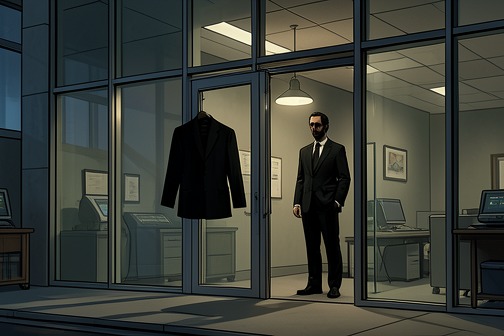
The suppression of [Palinurus Maciver Junior](entity:character-recall-character-palinurus-maciver-j-bef8b0b1c03a)’s allegations is revealed not by a formal finding but by the gap between a recorded statement and the investigation’s official record. The cassette preserves serious accusations against his stepmother, [Kay Kafka](entity:character-recall-character-kay-kafka-c9821e026433), and suspicions about the conduct of [Andrew Dalziel](entity:character-recall-character-andrew-dalziel-d9a8d5234865); the case file and inquest contain no trace of them. That absence becomes a consequential part of the inquiry into his father’s death, because it shows how allegations could be heard, recorded, and then kept outside the account authorities treated as official.
## The allegations and the recording
On [March 27, 1992](entity:time-recall-time-march-27-1992-9171b7475d98), Palinurus Maciver Junior made what the cassette identifies as a voluntary statement in the presence of Detective Superintendent Andrew Dalziel. The recording begins in a familiar, casual voice: Dalziel notes the time, jokes about missing his lunch and meat pie, and invites Maciver to tell his story. When [Peter Pascoe](entity:character-recall-character-peter-pascoe-3f6c4f8bc63a) later hears the tape, its unlabelled form and Dalziel’s relaxed breach of several clearly stated procedural rules alert him to the significance of what follows, even before Maciver’s allegations are played.
Maciver says he is making the statement because his earlier suspicions about his father’s alleged suicide have not prompted visible action. He believes that [Palinurus Maciver Senior](entity:character-recall-character-palinurus-maciver-s-615fe42d06b1) was deliberately driven to take his own life and alleges that Kay was involved, while acknowledging that he does not know precisely what happened. He points to her absence in the United States when the death occurred as suspicious, but also speculates—without claiming to know how it could have happened—that she might have been present in the study. The recording thus preserves both the force of his accusation and the uncertainty within it: he presents a theory of deliberate persecution, not an account backed by physical evidence.
He also describes conduct by Kay that he says began after she came to [Moscow House](entity:location-recall-location-moscow-house-e45b6ce846c0). According to his statement, she exposed herself to him and made sexual advances when he was fifteen, a minor and her stepson. He recounts one occasion when she entered the shower naked, embraced and kissed him, and touched him sexually; he says his body reacted despite his distress and confusion. Maciver frames this as sexual abuse and a crime requiring investigation. He admits that speaking while his father was alive had been difficult and says he may have raised the matter too late or in the wrong way. With his father dead, he declares himself ready to testify publicly, beginning with Dalziel. These remain allegations preserved in the recording, not findings established by the investigation.
## The missing record and the earlier inquiry
The decisive fact is what the official materials do not contain. Peter Pascoe observes that, if [Shirley Novello](entity:character-recall-character-shirley-novello-acb52f7abc7e)’s account of the investigation is accurate, neither Palinurus Maciver Junior’s accusations against Kay Kafka nor his insinuations about Andrew Dalziel had troubled the official record. Novello confirms that the file contains no signed transcript of the cassette, no reference to it, and no mention of its contents at the inquest. The statement exists as a recording, but not as part of the documented case presented to the coroner. Pascoe’s response is to tell Novello that she must forget hearing it, both times: the tape’s rediscovery exposes a procedural and institutional silence, while also placing those who have now heard it in a difficult position.
[Edgar Wield](entity:character-recall-character-edgar-wield-f2725779c249)’s recollection supplies a history for that silence. He remembers a proper investigation into Palinurus Maciver Senior’s death, but describes a family already riven by hostility and a son who was casting most of the accusations. In Wield’s account, Dalziel sat heavily on the matter and somehow choked Maciver off; Wield expected the inquest to erupt, yet found it quieter than a carpet-bowls game. He cannot say how Dalziel achieved that result. The gap between a formally conducted inquiry and a subdued public hearing therefore does not resolve the accusations; it makes the handling of them itself an object of suspicion.
The recovered cassette sharpens Wield’s unease. After hearing the news of the later death, he had tried to dismiss his renewed concern; seeing Dalziel confront Kay brought it back. He tells Pascoe about the tape, and recognizes it as the cassette Pascoe has just placed on Dalziel’s desk. The scene links two forms of evidence that had been kept apart: Wield’s memory of how the first inquiry was managed and the recording that was absent from its file. Neither alone establishes why the allegations disappeared, but together they make the omission difficult to treat as a harmless clerical gap.
The novel’s later account of the takeover gives that silencing a wider political context without proving that every part of the family case was directed by the same plan. [Laurence Waverley](entity:character-recall-character-laurence-waverley-40a78e5bcc5e) says that Palinurus Maciver Senior had begun accusing [Ash-Mac’s](entity:organization-recall-organization-ash-mac-s-f21cc1f49b86) of sanction-busting and other illegal trading, and that officials feared hard evidence could produce a scandal. Waverley’s recommendation was to undermine the older man’s credibility and let events take their course. He also recounts that his superiors considered encouraging the younger Maciver’s revelations, but that concern for Kay, Helen, and Lavinia led him to examine ways of keeping him quiet; Kay, he says, had made her own arrangements. In the same account, Waverley attributes the ease of standing back to Kay’s friendship with Dalziel, whose control of the inquiry left the younger Maciver silenced without Waverley having to intervene directly. This retrospective explanation connects suppressed family testimony to corporate and governmental interests, while leaving the precise mechanics—and the truth of the allegations—unsettled.
## The politics of invisibility
The allegations’ disappearance from the case record sits within a wider pattern of concealed wrongdoing, though the novel does not establish that the same actors engineered both forms of silence. A text Kay reads on a laptop, titled “ASHUR-PROFFITT & THE CLOAK OF INVISIBILITY,” turns the Iran-Contra affair and British arms sales to [Iraq](entity:location-recall-location-7cb5e3b1d5ce) during the Iran-Iraq war into a deliberately whimsical modern fairy tale. Its central point is more serious than its style: people operating on both sides of the Atlantic could violate their countries’ laws while those in authority appeared unable to see what was happening. The image of invisibility resonates with a case in which a statement was recorded but excluded from the official account.
The fairy tale’s ending rejects the excuse that arming one side is acceptable because it serves a patriotic interest in weakening an enemy. It insists that the political argument has changed: those who send weapons must answer for which side they serve. That movement—from jocular concealment to an explicit demand for accountability—broadens the significance of the missing allegations. The tape’s absence is not proof that the corporate and governmental interests around Ash-Mac’s dictated how the family accusations were handled; it does, however, place the inquiry’s silence beside a larger world in which legality, public explanation, and actual conduct repeatedly fail to align.
## What the silence leaves unresolved
Wield’s unease does not amount to proof that Dalziel suppressed the allegations for Kay’s sake. He recalls Dalziel taking control of the earlier inquiry and Maciver being choked off, but cannot explain how it was done; when Pascoe asks whether the renewed concern might come down to sex, Wield resists the assumption that his being gay makes him unable to understand heterosexual motives. The exchange keeps suspicion alive without turning it into a settled account of either man’s conduct.
Waverley’s retrospective version adds a further complication: his superiors were prepared to encourage Maciver’s revelations when they might divert attention from Ash-Mac’s, yet Waverley himself feared the damage a scandal could do to Kay, Helen, and Lavinia. Maciver’s changing of the locks at Moscow House had warned him that the son might cause trouble, but Waverley says Kay made her own arrangements before his contingency plans were needed. The episode therefore ends not with a single, fully demonstrated chain of command, but with testimony shaped by competing loyalties and interests. The cassette makes the omission visible; it does not finally establish who caused it, or whether Maciver’s allegations were true.
Event 13
Ashur-Proffitt’s acquisition and restructuring of Maciver’s
[Ashur-Proffitt’s acquisition and restructuring of Maciver’s](entity:event-recall-event-ashur-proffitt-s-acquis-5722f3058875) is presented as both a corporate takeover and a rupture in the family and workplace order built around [Palinurus Maciver Senior](entity:character-recall-character-palinurus-maciver-s-615fe42d06b1). The business was vulnerable during a recession, but [Palinurus Maciver Junior](entity:character-recall-character-palinurus-maciver-j-bef8b0b1c03a) argues that its decline was not inevitable: in his account, the American company used his father’s distracted state to secure an advantage, then replaced the old family firm’s paternal management with a more severe corporate regime. The takeover’s significance lies in that double change: Maciver’s passed into new hands, and the relationships that had governed its work and its family were recast as liabilities or instruments of control.
## Background and opportunity
Maciver’s faced a difficult manufacturing climate. Businesses were failing around it, and the company was in poor condition, but Palinurus Maciver Junior insists there was still room for recovery. Looking back at the firm’s later success, he imagines that, with additional financing and his father holding on, Maciver’s might have become a Thatcher-era business success. This is a counterfactual, not proof that survival was assured; it nevertheless establishes the son’s view that the takeover was an opportunity seized from a vulnerable but not hopeless company.
The American [Ashur-Proffitt](entity:organization-recall-organization-ashur-proffitt-2e2148ea642c) corporation had its eyes on Maciver’s. Palinurus Maciver Junior compares the international commercial environment to a jungle in which a company’s weakness attracts competitors ready to profit. He says his father was preoccupied by personal difficulties and that Ashur-Proffitt’s representatives studied his private life. In the son’s account, the crucial opening came when his father began paying as much attention to Ashur-Proffitt’s senior executive’s personal assistant, [Kay Kafka](entity:character-recall-character-kay-kafka-c9821e026433), as to the companies’ financial affairs. He suspects that Ashur-Proffitt acted once it recognized this distraction, though he explicitly does not claim the relationship had been engineered from the outset.
## Marriage, leverage, and suspicion
The takeover’s personal dimension is filtered through Palinurus Maciver Junior’s hostility toward Kay Kafka. He recalls first seeing her as a foreign newcomer whom his father wanted the children to accept in place of their recently deceased mother. Her early kindness toward him and Cressida, and her affectionate attention to Helen, did not prepare him for what he later alleges was predatory conduct. His testimony is emphatic, but it remains his testimony: the account makes the family conflict inseparable from his accusation without independently resolving it.
Palinurus Maciver Junior also questions why Kay Kafka married his father. He considers several possibilities rather than claiming to know her motive: Ashur-Proffitt might have wanted someone close to Palinurus Maciver Senior while it reorganized the company; Kay might have been seeking financial security through a future divorce; or she might have anticipated becoming a wealthy widow. He reports that both he and his brother Pal suspected from the beginning that she was acting for herself. Their resentment was bound up with the marriage’s domestic intrusion: Kay occupied their mother’s house, bedroom, and possessions. In this telling, business control and family intimacy overlap, but the proposed motives remain suspicions, not established facts.
## The new workplace order
The change in management was visible in everyday dealings with employees. Under Palinurus Maciver Senior, Maciver’s was remembered as a family firm where workers were addressed personally and lateness was noticed, but circumstances mattered. An employee kept awake by a new baby might be offered help, such as being woken for a shift or moved to a different one. The account depicts a paternal system, with its own hierarchy, but one that could respond to individual hardship; the lack of a strong union was attributed to the belief that such representation had not previously been necessary.
Under the new American management, the reported rule was starkly different: a single warning could be followed by dismissal. The company was described as streamlined and efficient, while the new regime was also associated with suppressing union activity. This contrast gives restructuring a human scale. Corporate efficiency did not merely alter ownership or organization; it changed what an employee could expect when personal circumstances interfered with work. The old arrangement’s accommodation gave way to a standardized discipline, and workers bore the consequences directly.
## Aftermath and retrospective meaning
Palinurus Maciver Senior retained what Sergeant Wield calls a token job, but the title did not restore his authority. Wield reasons that it may have taken time for him to understand how little influence he had over the company’s direction. He imagines that Palinurus Maciver Senior might have tried to assert himself, only to be told that he belonged to the past. Wield interprets the loss as a double betrayal: the founder may have felt he had been displaced, and that he had failed the employees whose livelihoods had been tied to the family firm. Wield says he could understand how this might have contributed to the older man’s collapse, while stopping short of presenting that interpretation as a proven cause.
The later emergence of [Ash-Mac’s](entity:organization-recall-organization-ash-mac-s-f21cc1f49b86) as a large, financially buoyant international group underscores how far the operation had moved from Maciver’s. Wield’s internet research also took him to the [Junius](entity:character-recall-character-junius-fd76824f1c61) site, reached through a link on Ashur-Proffitt’s own website. Junius alleged that an Ashur-Proffitt subsidiary had been involved in the Iran arms scandal and published material concerning [Iraq](entity:location-recall-location-7cb5e3b1d5ce). These allegations add a wider political shadow to the new corporate order, but they are presented as claims on the site, not as independently confirmed findings. Taken together, the takeover is remembered through competing scales of consequence: a company’s expansion, employees’ loss of a more accommodating workplace, and a family’s suspicion that commercial control was gained through the vulnerabilities of its patriarch.
Event 14
Pal Maciver Jr.’s will change
[Pal Maciver Jr.’s will change](entity:event-recall-event-pal-maciver-jr-s-will-c-f5bd6e8be596) sharply reduced [Sue-Lynn Maciver](entity:character-recall-character-sue-lynn-maciver-7b59a4810d6a)’s inheritance and redirected the residue of his estate to his sister, [Cressida Maciver](entity:character-recall-character-cressida-maciver-c92928d78f04), and his aunt, [Lavinia Maciver](entity:character-recall-character-lavinia-maciver-11e70a8713da). Made about six weeks before his death, the revision became known through Sue-Lynn’s urgent search for the document and her confrontation with his solicitor. Its terms transformed an initially vague report of an unfavorable change into a concrete dispute over what the will meant for the surviving family.
## The revision and its distribution
According to Mr Herring, the solicitor who handled the matter, [Palinurus Maciver Junior](entity:character-recall-character-palinurus-maciver-j-bef8b0b1c03a) had visited him about six weeks earlier to change his will. After a few small bequests, the revised document left the residue of the estate to be divided between Cressida Maciver and Lavinia Maciver. The account identifies the two women as the principal beneficiaries of what remained after those smaller gifts; it does not specify the value of the estate or the amounts of the other bequests.
Sue-Lynn was not excluded altogether, but her provision was strikingly small: £50. The will attached a cryptic explanation, describing this as more than enough to pay any outstanding bill to her medical adviser for services received. That wording joined a practical sum to an insinuation whose meaning is not explained in the account. It made the bequest more than a simple statement of amount: it conveyed Palinurus’s judgment of his wife while giving no further explanation of the accusation implied by the reference to medical services.
The arrangement created a marked division between Sue-Lynn and the relatives named to receive the estate’s residue. Yet the available account establishes the will’s terms, not Palinurus’s full reasoning for them. Earlier, [Laurence Waverley](entity:character-recall-character-laurence-waverley-40a78e5bcc5e) had heard that the will had changed to Sue-Lynn’s disadvantage, but did not know why. Sue-Lynn had also spoken of Palinurus setting a private detective to follow her; Waverley could only speculate that she might have been involved in some misconduct. That remains speculation, not a demonstrated explanation for the revision.
## Discovery and confrontation
The new terms came to light during the aftermath of Palinurus’s death. Sue-Lynn went through her late husband’s papers and, as Mr Herring understood it from her account, also searched his cellar. She could not find the copy of the will she wanted. During the evening she telephoned the solicitor at home, demanded that he bring the original to [Casa Alba](entity:location-recall-location-casa-alba-45601bfea8ca), and insisted that he confirm its contents over the phone.
Mr Herring said he could not bring the original because he was at home with guests. He nevertheless confirmed the terms, explaining that Sue-Lynn was entitled to know them. He also described her as abusive during the call and said she threatened to come to his house unless he answered. His relief at giving the information from a distance, rather than face to face, makes the exchange feel like an extension of the conflict surrounding the will: the document was not available to Sue-Lynn, but its contents could no longer be kept from her.
The scene is presented through Novello’s inquiries rather than through Palinurus’s visit to the solicitor or Sue-Lynn’s search itself. Mr Herring’s account supplies the six-week interval, the distribution, the £50 provision, and the circumstances of disclosure. The earlier report to Waverley establishes that the widow already knew the change harmed her interests, but the solicitor’s account specifies exactly how. The reader therefore encounters the decision as a revelation assembled after the death, not as a witnessed exchange between husband and wife.
## Immediate consequences and unresolved dispute
After learning the will’s contents, Sue-Lynn asked whether she could contest it. Mr Herring was confident that she would and anticipated an interesting case that might continue indefinitely. His prediction makes litigation the likely next stage of the conflict, but the account does not establish that a challenge was filed, how it was decided, or whether the will’s distribution ultimately stood.
The discrepancy between the modest provision and the estate residue also changes the stakes of Sue-Lynn’s search. She had first been unable to locate a copy and sought the solicitor’s confirmation; once he disclosed the terms, the question was no longer merely where the document was, but whether its provisions could be contested. Her grief is acknowledged in the surrounding account, but the will discussion records anger, threats, and a demand for information alongside it. The evidence does not reduce her response to either bereavement or financial interest alone.
## Significance in the investigation
The change is a consequential piece of posthumous information because it establishes that Palinurus deliberately revised the distribution of his estate and left his wife a pointedly limited bequest. It also supplies a possible source of conflict among Sue-Lynn, Cressida, and Lavinia without proving that any beneficiary caused or influenced the revision. The solicitor’s recollection is specific about what was written and when the change was made, but it cannot resolve why Palinurus made it.
That distinction matters to the investigation’s account of the family. The will makes estrangement and suspicion legible in financial terms: the wife receives £50, while the sister and aunt share the residue. Its cryptic comment invites questions but does not answer them. By ending with the prospect of a potentially protracted contest rather than a verdict, the episode leaves both the legal outcome and the personal motive unsettled.
Event 15
The Junius intrusion into Ashur-Proffitt’s website
[The Junius intrusion into Ashur-Proffitt’s website](entity:event-recall-event-the-junius-intrusion-in-de8f5e5a9fdf) is a corporate disclosure episode whose importance lies as much in its point of entry as in its allegations: a link presented as ordinary company information redirected visitors to an unauthorized site exposing material about the company’s past. The disclosures connected [Ashur-Proffitt](entity:organization-recall-organization-ashur-proffitt-2e2148ea642c) to the Arms for Iran scandal and to [Iraq](entity:location-recall-location-7cb5e3b1d5ce), while the intrusion also made visible the distance between the restructured business and the old Maciver’s. Its author’s identity remained uncertain, though [Kay Kafka](entity:character-recall-character-kay-kafka-c9821e026433) came to suspect [Francis Phillips](entity:character-recall-character-francis-phillips-1b9452c572d5).
## The intrusion and its disclosures
The site was not found through an especially difficult search. A sergeant explained that whoever had set up [Junius](entity:character-recall-character-junius-fd76824f1c61) had placed a hyperlink within the Ashur-Proffitt website itself. Clicking the company’s More Information about our overseas operations link unexpectedly transferred a visitor to Junius, where its material appeared. That route made the disclosure pointed: the company’s own informational doorway became the means by which visitors were directed to allegations against it.
Junius claimed that at least one Ashur-Proffitt subsidiary had been involved in the Arms for Iran scandal. As the sergeant summarized the allegation, it concerned sanction-breaking: arms were arranged for sale to Iran, and the profits were then used to subsidize the Contra guerrillas in Nicaragua. The site also contained extensive material about Iraq. These are presented as Junius’s claims, not as findings independently established in the episode; the account records the accusation and its political context without resolving its truth.
The name Junius recalled the pseudonym of an eighteenth-century writer who attacked the government, the judiciary, and George the Third, and whose identity was never conclusively established. The historical parallel gives the modern intrusion a recognizable posture: an anonymous critic using public argument to challenge powerful institutions. But the parallel does not identify the contemporary author. Even the historical candidate Kay later considered was only a clue around which she formed a suspicion.
## A breach that exposes corporate change
The intrusion’s significance extends beyond the scandal allegations. The sergeant saw the material as demonstrating how far [Ash-Mac’s](entity:organization-recall-organization-ash-mac-s-f21cc1f49b86) had moved from the old Maciver’s. The company’s overseas operations and corporate structure represented a transformation that, in his reading, could have been deeply unsettling to Pal senior. Though given a job, Pal senior may have gradually understood it to be merely token; the sergeant speculated that he first tried to assert his influence, then had to face that he was no longer the man he had been.
That interpretation links corporate change to personal rupture. The sergeant imagined Pal senior feeling not only betrayed by the business but also as though he had betrayed its employees. He thought this might help explain how Pal senior could have cracked. The scene does not establish that the website’s disclosures caused Pal senior’s decline, nor that the company’s changes alone account for it. Rather, the intrusion supplies a way to see the institutional upheaval against which the sergeant interprets that decline: what had happened to Maciver’s was not an abstraction but a loss of authority, belonging, and responsibility as he understood them.
## Removal and Kay Kafka’s suspicion
By the time Kay Kafka sat at her computer looking at the Ashur-Proffitt website, its designers had been alerted to the Junius invasion and had removed all visible traces of it. The cleanup ended the site’s immediate appearance on the company page, but it did not persuade Kay that the matter was over. She expected Junius to return. The contrast between rapid removal and anticipated recurrence leaves the intrusion unresolved: the company could erase the visible link, but that did not settle who was behind it or whether the disclosures would reappear.
Kay had investigated the pseudonym out of idle curiosity and learned that the identity of the original Junius had never been established, although Sir Philip Francis was considered the likeliest suspect. She took the resemblance between that name and Francis Phillips as more than coincidence, concluding privately that Frank was the person behind the modern Junius. Her reasoning drew force from the fact that Frank had cause to hate Ashur-Proffitt, just as she had cause to hate him. The narrative presents this as Kay’s conviction, not confirmation: no identification is made public or independently verified in these scenes.
## Private knowledge and unresolved consequences
Kay considered telling [Tony Kafka](entity:character-recall-character-tony-kafka-e64a98b07fbe) about her suspicion, then decided against it. Her decision was not a simple declaration of forgiveness: she acknowledged that Frank had wronged her and that she had sometimes taken revenge, though in a general rather than specifically targeted way. At the same time, she credited him with bringing her the greatest joy of her life and did not hold him responsible for its greatest pain. Those conflicting feelings help explain why the possible identity of Junius remained private knowledge rather than information she passed to her husband.
She was also concerned that some of Tony’s associates might react extremely to discovering who Junius was. From what Tony had said that morning, Kay understood that his attention had shifted away from identifying the intruder and toward the possible reactions of those around him. Her silence therefore sits at the intersection of personal history and corporate danger: she suspects an old adversary, recognizes the capacity for revenge on both sides, and withholds the suspicion while anticipating a volatile response. The intrusion leaves several matters open at once—the truth of the allegations, Junius’s identity, and the consequences of bringing that identity into the open.
Event 16
Pal Maciver Sr.'s suicide
[Pal Maciver Sr.'s suicide](entity:event-recall-event-pal-maciver-sr-807eed5cca6f) becomes more than a past family tragedy: its methodical appearance, literary detail, and uncertain meaning form a template his son later appears to have followed. The novel places the death amid the collapse and takeover of the family business, but never establishes those pressures as its cause; instead, it makes the limits of explanation part of the event’s continuing significance.
## Circumstances and Context
Pal Maciver Sr. inherited a flourishing machine-tools business built up by his father, Liam, after Liam’s rival Mungo Macallum died. He took pride in his company and in the social identity of an English gentleman. That life changed after his climbing accident left his left leg unable to bend, ending his mountaineering, and the business later suffered as orders dried up and workers were laid off. In the ensuing downturn, [Ashur-Proffitt](entity:organization-recall-organization-ashur-proffitt-2e2148ea642c) acquired the company. Pal Senior received money and a seat on the board, a position Dalziel describes as more face-saving than substantial employment.
These losses provide context, not a settled explanation for the suicide. Dalziel suggests that the takeover affected Pal Senior, but the account does not show that business decline alone drove him to act. The gap between visible circumstances and unknowable motive remains open.
## The Death and Its Presentation
Pal Senior used a shotgun. [Kay Kafka](entity:character-recall-character-kay-kafka-c9821e026433) later characterizes him as practical and self-disciplined: he believed that once a person committed to a task, it should be carried through without second thoughts. In her account, he would not have needed a dramatic structure to complete his decision.
Yet the scene also contained an artistic element. An Emily Dickinson poetry volume lay on the desk, open at a poem Kay and [Peter Pascoe](entity:character-recall-character-peter-pascoe-3f6c4f8bc63a) discuss as evoking a mind losing its grasp. Pascoe sees a tension between the book’s carefully chosen place and Kay’s image of a man who disdained theatrical poses. The object does not resolve the motive; it complicates the idea that the death was simply a matter-of-fact act.
## Interpretations and Uncertainty
When Pascoe reflects on suicide, he distinguishes it from the usual work of investigating murder. Reconstructing a killer’s state of mind can remain an intellectual pursuit, he reasons, whereas trying to understand someone for whom death seemed the only escape risks turning the inquiry back upon the investigator’s own inner life. Pal Senior’s death thus unsettles the boundary between professional analysis and personal emotional exposure.
Kay offers a further distinction between husband and son. She considered Pal Senior unlike his son, who, in her view, might have sought a dramatic form once he had decided to die. Her account does not claim to know why either man made that decision. Instead, the contrast shows how the same outward pattern can invite different interpretations without making either man’s inner state fully legible.
## Aftermath and the Echo in His Son’s Death
A decade later, [Pal Maciver Junior](entity:character-recall-character-pal-maciver-junior-a51dfddf9737) died in circumstances that closely replicated his father’s. Peter Pascoe recognizes the resemblance as macabre, while later reasoning from [Laurence Waverley](entity:character-recall-character-laurence-waverley-40a78e5bcc5e) proposes that Junior had learned something about the earlier death from [Jake Gallipot](entity:character-recall-character-jake-gallipot-1e00a7bca456). Waverley suggests that Junior used whatever distorted account Gallipot supplied as a template. This remains an interpretation, not a complete reconstruction of either death.
Pascoe also concludes that Dalziel had taken over the inquiry into Kay’s husband’s suicide to protect her, and that the accusations in Junior’s recorded statement had somehow disappeared. The old case therefore returns not only as a repeated family pattern but as a question about what was known, what was concealed, and what the available evidence can establish. The father’s death leaves no definitive answer to its motive; its most consequential afterlife is the uncertain story through which the son understood and repeated it.
Event 17
Pal Maciver Jr.'s death
[Palinurus Maciver Junior](entity:character-recall-character-palinurus-maciver-j-bef8b0b1c03a)’s death at [Moscow House](entity:location-recall-location-moscow-house-e45b6ce846c0) turns a reported suicide into a troubling repetition of family history: he died in a manner that closely echoed his father’s earlier death there. The parallel suggests a link between the two events, but neither the motive nor the precise circumstances that led him to act are conclusively settled.
## Discovery and report
After spending the night lost in [Blacklow Wood](entity:location-recall-location-blacklow-wood-b500d1296021), [Hat Bowler](entity:character-recall-character-hat-bowler-3a947cc7470a) wakes beneath the trees and goes with [Laurence Waverley](entity:character-recall-character-laurence-waverley-40a78e5bcc5e) to see [Lavinia Maciver](entity:character-recall-character-lavinia-maciver-11e70a8713da). Waverley has heard the news on the radio and checked it before coming: her nephew is dead, and, he tells her, he killed himself the previous night at Moscow House. The announcement also recalls the death of her brother, [Palinurus Maciver Senior](entity:character-recall-character-palinurus-maciver-s-615fe42d06b1). Lavinia is silent for nearly a minute, then asks whether she will be needed and what she should do. Waverley advises her to come with him and find out what there is to learn. The first account of the death thus arrives not at the house where it occurred, but in a quiet kitchen, through the stunned response of a relative whose family has now suffered two similar losses.
## A family and business inheritance
The repetition gains weight from the history attached to the father’s name. The family business had prospered through demand for machine tools during the war and post-war years. When Palinurus Maciver Senior took over, it was booming; he made the business his central concern and its success helped support his social ambitions. His own life had once been shaped by climbing as well as business. After a serious fall left his left leg unable to bend, he could no longer pursue mountaineering in the same way and threw himself more fully into the company.
That inheritance later became precarious. After 1979, the business suffered falling orders and layoffs. An American buyer, [Ashur-Proffitt](entity:organization-recall-organization-ashur-proffitt-2e2148ea642c), offered Palinurus Maciver Senior a way to avoid further job losses, but the resulting takeover transformed the family company into [Ashur-Proffitt-Maciver’s](entity:organization-recall-organization-ashur-proffitt-m-2699dece9a25). He received money and a board position that was described as more a face-saving role than a substantial job. This history gives the father’s death a context of lost activity and altered status, but the account does not establish the business upheaval as a cause of either suicide.
## The repeated method and the missing weapon
[Peter Pascoe](entity:character-recall-character-peter-pascoe-3f6c4f8bc63a) later recognizes that the son’s death was macabre not simply because it was a suicide, but because it almost exactly replicated his father’s. The similarity makes the manner of death a clue and a possible statement, though [Kay Kafka](entity:character-recall-character-kay-kafka-c9821e026433) doubts that Palinurus Maciver Junior intended to communicate a clear message; she suggests instead that he may have been striking a pose. Neither interpretation is confirmed.
The firearms evidence adds a concrete but incomplete link. The shotgun used by Palinurus Maciver Senior remained in police hands, while the weapon attributed to his son appeared to be the other half of the pair. Kay presumes the second gun had been at Moscow House, but the gun case in the study could hold only one weapon and showed no sign of having contained a gun for a considerable time. The available account therefore connects the two deaths through their weapons while leaving the second shotgun’s whereabouts before the death uncertain.
## Suspected discoveries and unresolved causes
Laurence Waverley later offers a theory that connects the son’s death to a possible discovery about his father. He suspects that Palinurus Maciver Junior learned something that made him reconsider the circumstances of the older man’s death, perhaps through a record of dealings with [Jake Gallipot](entity:character-recall-character-jake-gallipot-1e00a7bca456). In Waverley’s account, Palinurus Maciver Junior may have drawn Gallipot into revealing what he knew or suspected, just as his father had gradually turned Gallipot from one ostensible purpose to another. Waverley cannot say how this was achieved, and Gallipot’s death in an accident removed the chance to question him directly.
Waverley does not believe that this information alone explains the suicide. He thinks it shocked Palinurus Maciver Junior but that a more immediate, personal occasion must have precipitated the decision; after that decision, he believes, Palinurus Maciver Junior repeated his father’s death using a confused account from Gallipot as a template. This remains Waverley’s interpretation, not a verified reconstruction. The investigation consequently distinguishes between a possible explanation for the form of the death and the still-unknown cause of the decision itself.
## Bereavement, doubt, and narrative significance
Kay Kafka’s account further complicates the question of motive. After her daughter, [Alba Dickenson](entity:character-recall-character-alba-dickenson-58820558824d), died, Kay withdrew into grief and only slowly returned to ordinary life. She later describes becoming aware of herself again when she was given a new position at work. When she came to England for the takeover negotiations, she met Palinurus Maciver Junior. His house, [Casa Alba](entity:location-recall-location-casa-alba-45601bfea8ca), carries a name that recalls her daughter; Peter Pascoe wonders whether it could have been intended as cruel mockery, but the possibility remains speculation rather than established fact.
Kay also recalls leaving for the United States with [Helen Dunn](entity:character-recall-character-helen-dunn-a1854e2d6f34) after a warm farewell with Palinurus Maciver Senior. She cannot know whether a letter from Palinurus Maciver Junior accusing her had already reached his father or arrived the next morning, or whether the accusations, if received, contributed to his suicide. She considers another possibility: that the letter was never sent and that Palinurus Maciver Junior later invented it because he believed she was indirectly responsible for his father’s death. Her account preserves uncertainty rather than resolving blame.
For Peter Pascoe, the case also exposes the emotional difference between investigating a murder and trying to understand a person who has chosen death. Reconstructing a killer’s state of mind can remain an intellectual task; trying to follow someone toward death as an escape, he recognizes, turns the inquiry back on the investigator. Palinurus Maciver Junior’s repeated method therefore functions both as evidence about the family’s past and as a limit on what the investigation can know: the resemblance is unmistakable, while the final motive remains beyond a conclusive answer.